Meteor shower calendar 2026–2027
The next meteor shower is the Orionids, peaking on the night of .
In 2027 the Moon stays out of the way for the Quadrantids, Eta Aquariids, Southern Delta Aquariids and Perseids, and washes out the Lyrids, Leonids and Geminids.
Meteor showers by month, from today
October 2026 meteor showers
November 2026 meteor showers
December 2026 meteor showers
January 2027 meteor showers
April 2027 meteor showers
May 2027 meteor showers
July 2027 meteor showers
August 2027 meteor showers
October 2027 meteor showers
Peak nights are named by both dates because a meteor night straddles midnight, and shown for your time zone. Moon: how much moonlight there is in the peak night's best hours, at 40° N (34° S for the southern showers).
The year at a glance, 2026
All 2026 peaks
| Shower | Peak night | Maximum | Active | ZHR | Moon | Best from |
|---|---|---|---|---|---|---|
| Quadrantids | 21:15 UTC | Dec 28 – Jan 12 | 80 | Poor 100% | North | |
| Lyrids | 19:37 UTC | Apr 14 – Apr 30 | 18 | Excellent 36% | North-favored | |
| Eta Aquariids | 09:13 UTC | Apr 19 – May 28 | 50 | Poor 81% | South-favored | |
| Southern Delta Aquariids | 13:26 UTC | Jul 12 – Aug 23 | 25 | Poor 96% | South-favored | |
| Perseids | 02:01 UTC | Jul 17 – Aug 24 | 110 | Excellent 0% | North | |
| Draconids | 01:13 UTC | Oct 6 – Oct 10 | 5 | Excellent 3% | North | |
| Orionids | 18:20 UTC | Oct 2 – Nov 7 | 20 | Excellent 79% | North-favored | |
| Taurids | 18:54 UTC | Sep 20 – Nov 20 | 7 | Excellent 12% | Both | |
| Leonids | 23:43 UTC | Nov 6 – Nov 30 | 15 | Excellent 55% | North-favored | |
| Geminids | 13:41 UTC | Dec 4 – Dec 20 | 150 | Excellent 25% | North-favored | |
| Ursids | 22:09 UTC | Dec 17 – Dec 26 | 10 | Poor 98% | North |
All 2027 peaks
| Shower | Peak night | Maximum | Active | ZHR | Moon | Best from |
|---|---|---|---|---|---|---|
| Quadrantids | 03:26 UTC | Dec 28 – Jan 12 | 80 | Excellent 12% | North | |
| Lyrids | 01:40 UTC | Apr 14 – Apr 30 | 18 | Poor 95% | North-favored | |
| Eta Aquariids | 15:11 UTC | Apr 19 – May 28 | 50 | Excellent 0% | South-favored | |
| Southern Delta Aquariids | 19:37 UTC | Jul 12 – Aug 23 | 25 | Excellent 4% | South-favored | |
| Perseids | 08:10 UTC | Jul 17 – Aug 24 | 110 | Excellent 87% | North | |
| Draconids | 07:23 UTC | Oct 6 – Oct 10 | 5 | Poor 67% | North | |
| Orionids | 00:37 UTC | Oct 2 – Nov 7 | 20 | Fair 58% | North-favored | |
| Taurids | 01:02 UTC | Sep 20 – Nov 20 | 7 | Excellent 47% | Both | |
| Leonids | 05:59 UTC | Nov 6 – Nov 30 | 15 | Poor 80% | North-favored | |
| Geminids | 19:54 UTC | Dec 4 – Dec 20 | 150 | Poor 98% | North-favored | |
| Ursids | 04:21 UTC | Dec 17 – Dec 26 | 10 | Good 21% | North |
Calendar questions
Which meteor showers are best in 2027?
Moonlight decides it. In 2027 the Moon is out of the way for the Quadrantids, Eta Aquariids, Southern Delta Aquariids and Perseids, while it washes out the Lyrids, Leonids and Geminids.
Are meteor shower dates the same every year?
Almost. A shower peaks when Earth reaches the same point in its orbit, so the date drifts by up to a day from year to year and the hour changes every time. This calendar computes each year's peak from that orbital position rather than copying a fixed date.
Which meteor showers can you see from the Southern Hemisphere?
From southern mid-latitudes the radiants of the Lyrids, Eta Aquariids, Southern Delta Aquariids, Orionids, Taurids, Leonids and Geminids climb high enough to watch, and the Eta Aquariids and Southern Delta Aquariids are better there than in the north. The Quadrantids, Perseids, Draconids and Ursids are northern showers: from 34° S their radiants stay below about 10° in darkness, or never rise.
What does "moon conditions" mean in the calendar?
How much moonlight there is during the hours the radiant is highest on the peak night, at 40° N for northern and two-hemisphere showers and 34° S for southern ones. A bright Moon that sets before those hours counts as no Moon at all. The methodology has the details.
Free app · iPhone & Android
Get told when to look up
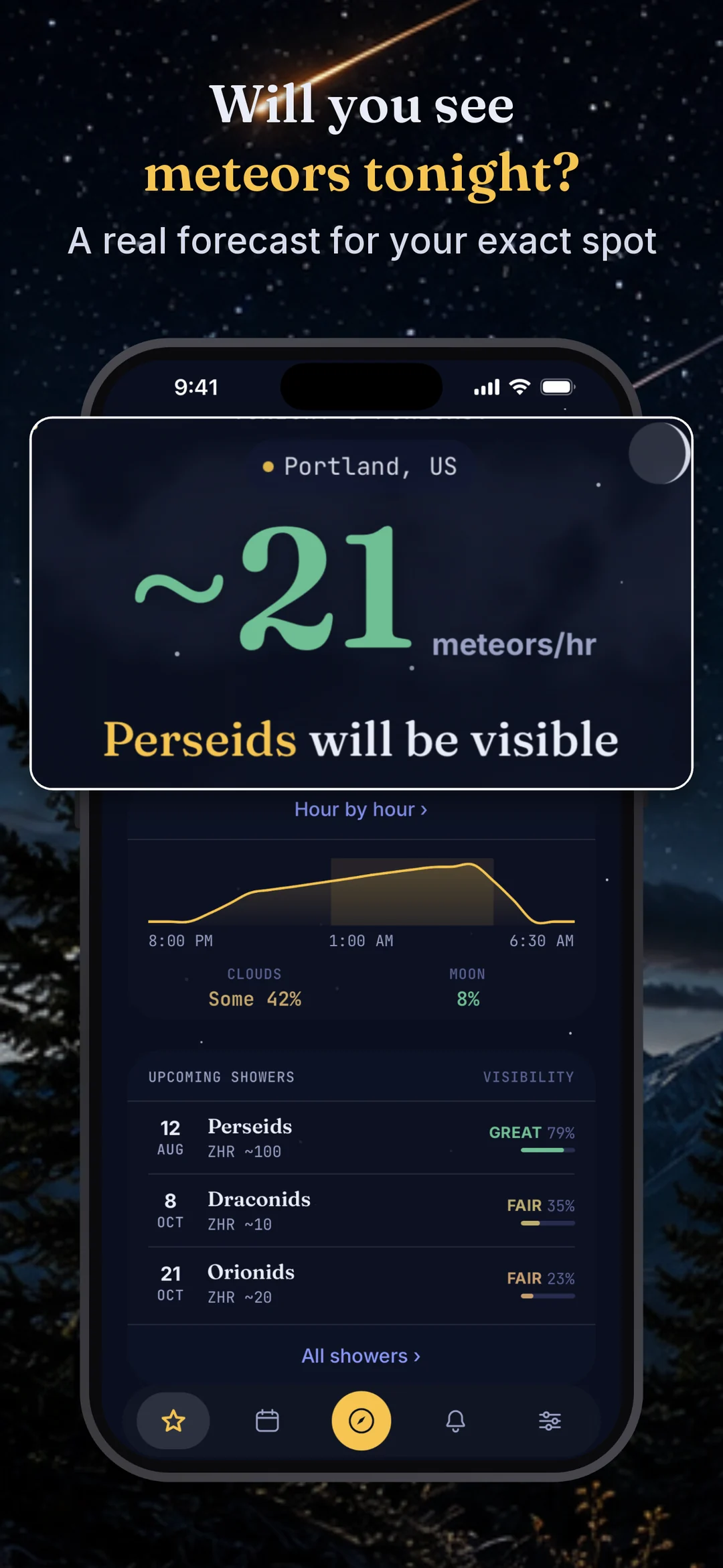
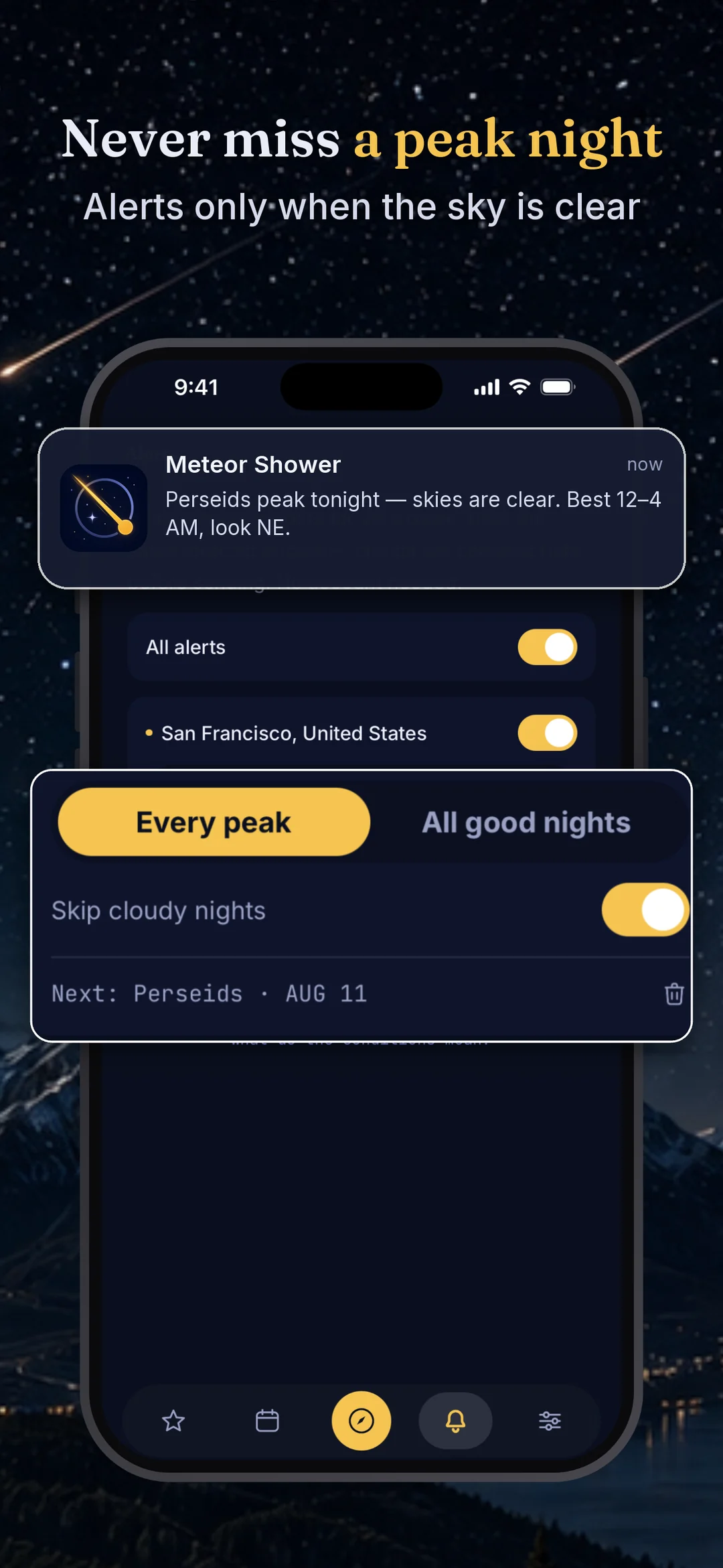
An alert in the evening for your exact location, and a second one when it's time to look up. Every alert checks the clouds first, so you know whether to bother.
- Tonight's forecast for your spot, hour by hour
- Peak-night alerts with a cloud check, free
- More places, widgets and an AR sky scanner with Premium


Peak times from the IMO shower calendar's solar longitudes, solved with the astronomy-engine ephemeris.